
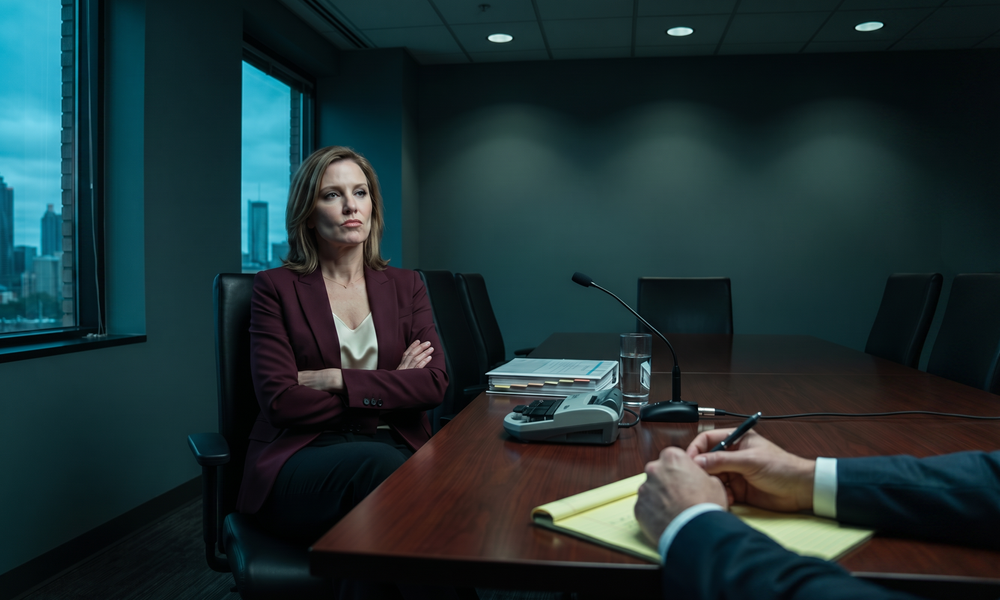
Most depositions are predictable. You ask questions, get answers, and build a picture of what happened.
But when a witness pleads the Fifth and refuses to answer, that pattern breaks.
The deposition is no longer about getting information. The focus becomes how precisely the questions are framed on the record.
In criminal cases, the witness’s silence generally can’t be used against them.
But civil cases are different. A refusal to answer can work against the witness by creating an adverse inference—the Court could impute an answer favorable to your case.
Why the Questions Matter More Than the Answers
When a witness isn’t going to answer, the question has to do the work.
It has to be clear and framed in a way that stands on its own.
Anyone reading the transcript later—judge, mediator, or jury—needs to understand exactly what was asked and why it mattered.
In a typical deposition, there’s more flexibility. You can explore, adjust on the fly, and clean things up later based on the answers you hear.
When the witness pleads the Fifth, you need a precise question that creates a precise adverse inference against the witness.
Building a Record That Can Be Used Later
The focus is on building a clean record.
Each question is designed to carry weight even if it goes unanswered. Done correctly, that record can influence case evaluation, settlement discussions, and how issues are framed at trial.
It’s a deliberate process that requires thinking several steps ahead.
The deposition may look uneventful on the surface, but what’s happening underneath is strategic.
Repeated refusals to answer clearly framed questions can also shape how the witness’s credibility is evaluated, even without substantive testimony.
How the deposition is handled in these situations can significantly impact the outcome.
If you’re facing a complex dispute, reach out to Alex Bartko Law to discuss your case.
Frequently Asked Questions About Witnesses Pleading the Fifth in Depositions
Can someone refuse to answer questions in a deposition?
Yes. A witness can invoke the Fifth Amendment and decline to answer questions that could expose them to criminal liability.
Does pleading the Fifth hurt a civil case?
It can. In civil cases, courts may allow negative inferences from a witness’s refusal to testify, depending on the circumstances.
What should a lawyer do if a witness is expected to plead the Fifth?
Preparation becomes critical. The questioning needs to be precise, structured, and designed to create a clear record that can be used later in the case.